
First Peoples Of The Caribbean
The Caribbean was peopled by three types, or groups, of inhabitants before the arrival of Christopher Columbus in 1492. The Ciboney or Guanahuatebey, the Taino or Arawak, and the Caribs. The cultural distinctions among the three groups are not great; the single greatest differentiating factor appears to be their respective dates of arrival in the region.

Recent archiological discovery seem to surgest that the Ciboney people were the first to arrived in the Caribbean and were found in parts of Cuba and the Bahamas. The Ciboney, or Siboney referes to cave dweller in Arawakan language were ceramic-using agriculturalist who migrated from Venezuela aproximately 2000BC, and seem to have had the most elementary forms of social organization.
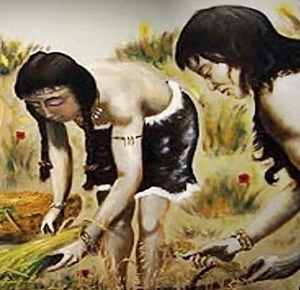
The most numerous groups were the Arawak, who resided in most of the Greater Antilles--Cuba, Jamaica, Hispaniola (presently, Haiti and the Dominican Republic), and Puerto Rico.
The smaller eastern island chain was the home of the Caribs, a tropical forest group related to most of the indigenous Indians found in Central and South America. Barbados and a number of smaller islands were not permanently inhabited. Estimates of the size of the pre-Hispanic population of the Americas vary considerably.
Both Columbus and Father Bartolom? de Las Casas (who wrote the first history of the Spanish conquest and treatment of the Indians) produced estimates that appear to defy credibility. Las Casas thought the population of the Caribbean might have been in the vicinity of several million, and by virtue of his having lived in both Hispaniola and Cuba where he held encomiendas, or the right to tribute from Indians, he is as close as we get to an eye-witness account.
Las Casas had a penchant for hyperbole, and it is doubtful that he could have produced reliable estimates for areas where he did not travel. Nevertheless, some more recent scholars have tended to agree with Las Casas, estimating as many as 4 million inhabitants for the island of Hispaniola in 1492. Although the dispute continues, a consensus seems to be developing for far lower figures than previously accepted.

An indigenous population of less than a million for all of the Caribbean would still be a relatively dense population, given the technology and resources of the region in the late fifteenth century. Probably one-half of these inhabitants would have been on the large island of Hispaniola, about 50,000 in Cuba, and far fewer than that in Jamaica. Puerto Rico, Dominica, St. Lucia, St. Vincent, and Trinidad all had fairly concentrated, if not large, populations.
The pre-European populations of the territories that later formed the Commonwealth Caribbean belonged to the groups designated as Caribs and Arawak. Both were tropical forest people, who probably originated in the vast expanse of forests of the northern regions of South America and were related linguistically and ethnically to such present-day tropical forest peoples as the Chibcha, the Warao, the Yanomamo, the Caracas, the Caquet?o, or the Jirajara--in short, the peoples found anywhere from Panama to Brazil.
Get a more detailed perspective of pre-colonial history of the Caribbean indigenous groups settlement.